
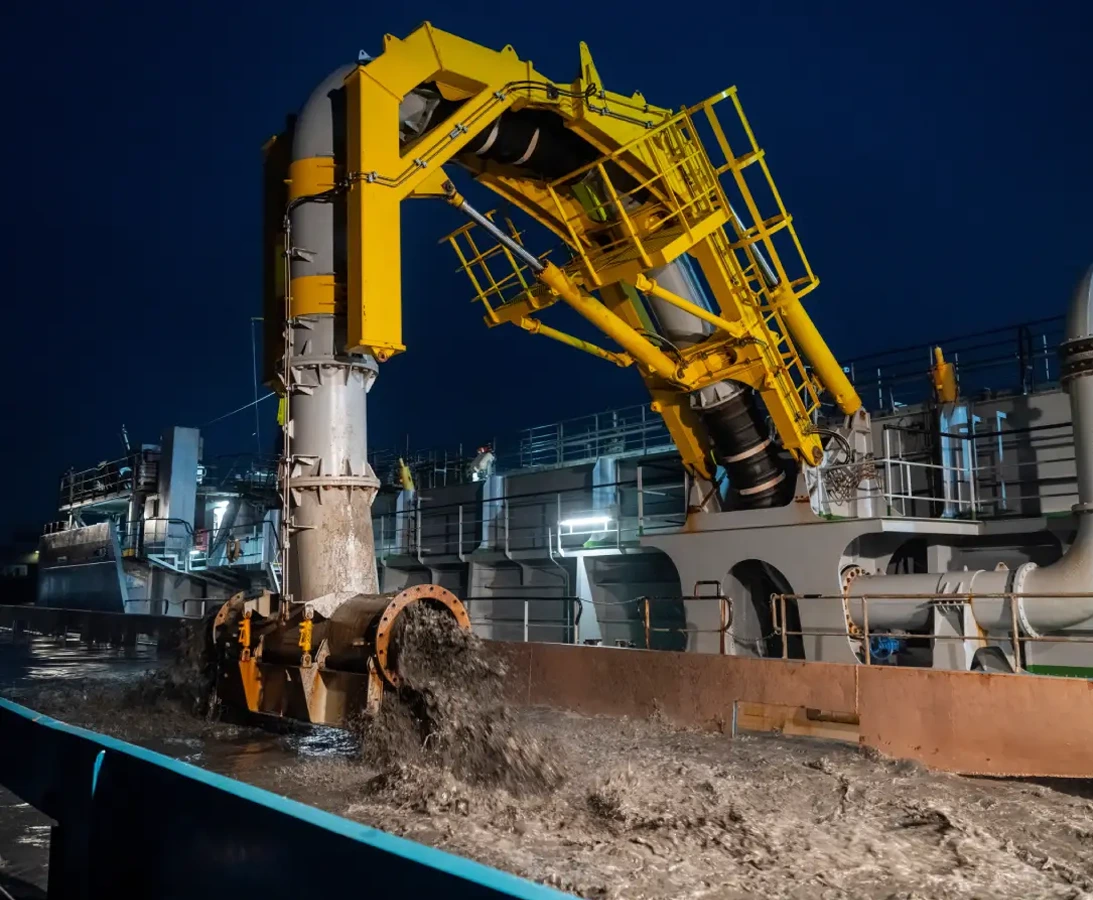
Industrial lagoon sediment removal plays a vital role in maintaining the efficiency and safety of treatment systems across manufacturing, chemical, and processing plants. As sediment builds up, it reduces capacity, disrupts flow, and increases the risk of contamination or overflow. Modern removal techniques now combine precision equipment, automation, and environmentally responsible practices, enabling lagoon cleaning without halting operations. These methods ensure that facilities meet compliance standards while maintaining consistent performance and long-term reliability.
Understanding Industrial Lagoon Sediment Challenges
Industrial lagoon sediment removal begins with recognizing how and why sediments accumulate in the first place. Over time, suspended solids, minerals, and chemical by-products settle at the bottom of ponds and lagoons. This buildup not only reduces storage capacity but also interferes with treatment efficiency and outflow quality, creating compliance issues for many facilities.
Common Sources of Sediment
- Industrial process discharge containing fine solids or residual materials
- Runoff carries dust, silt, and organic waste
- Precipitation of minerals and chemical residues from water treatment cycles
- Sludge formation due to biological or chemical reactions in stagnant zones
Operational and Environmental Impact
Sediment accumulation often leads to restricted water circulation and uneven sludge layers, causing localized contamination or anaerobic conditions. In treatment lagoons, excessive sludge can reduce retention time and affect the performance of aeration and filtration systems. It can also lead to:
- Overflows during heavy rainfall events
- Reduced storage or treatment efficiency
- Increased maintenance frequency for pumps and valves
- Higher regulatory risk if discharge quality is compromised
Traditional excavation or draining methods used in industrial pond sediment removal are often disruptive, requiring downtime and significant site rehabilitation. Modern, non-invasive dredging and hydraulic removal systems have replaced these older methods, enabling continuous operation during cleaning.
This shift toward efficient, low-impact methods sets the foundation for smarter lagoon management that aligns with both productivity goals and environmental responsibility.
Preliminary Assessment and Sediment Characterization
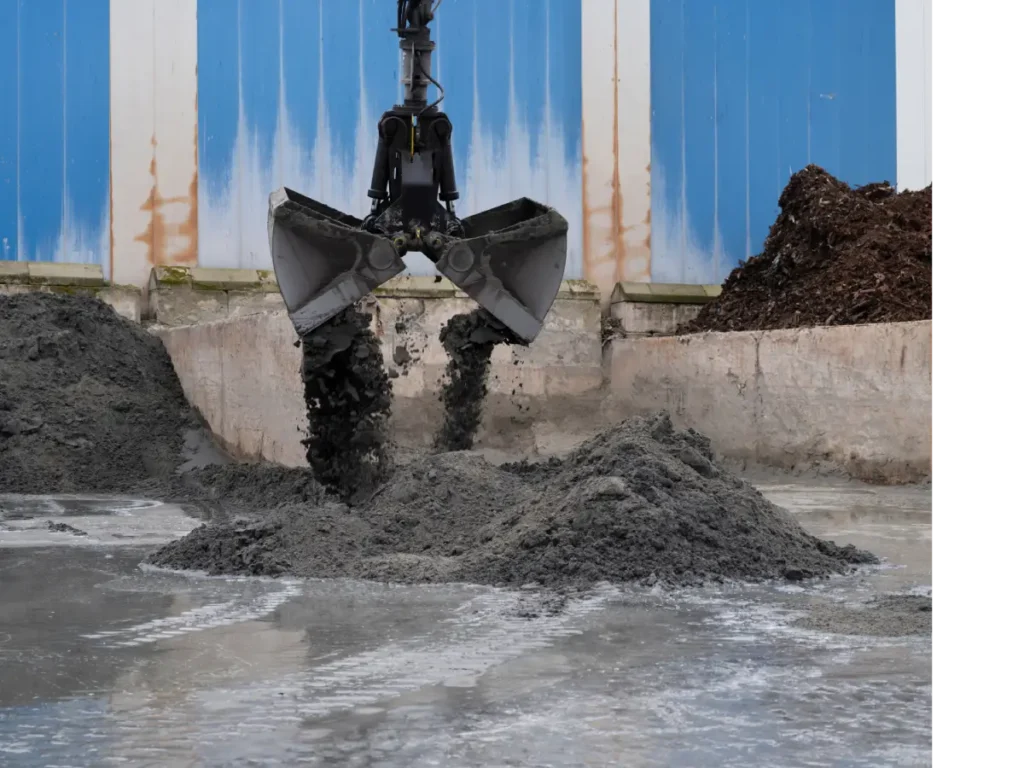
Before any industrial lagoon sediment removal begins, a detailed site assessment defines the scope, volume, and nature of material to be removed. This step ensures that the selected method is suitable for both the physical environment and the sediment’s chemical profile. It also helps reduce unnecessary handling costs and environmental risks.
Mapping and Surveying Techniques
Modern lagoon surveys rely on tools that provide precision without draining or disturbing the system:
- Hydrographic and bathymetric mapping to measure sediment depth and lagoon contours
- Sonar imaging for locating uneven sludge deposits and submerged structures
- Drone photogrammetry for capturing surface profiles and access planning
These technologies help engineers model the sediment layer and identify areas requiring targeted removal rather than full-scale dredging.
Sediment Testing and Analysis
The physical and chemical makeup of the sediment determines the right removal and disposal strategy. Laboratory analysis typically measures:
- Particle size distribution and moisture content
- Concentration of heavy metals or hydrocarbons
- Presence of organic matter, oils, or industrial by-products
- Sludge density and settling rate for dewatering feasibility
In certain industries, regulators may also require toxicity or leachate tests to ensure removed sediment can be safely reused or disposed of in approved facilities.
Defining the Removal Plan
Data from surveys and testing support planning for the most suitable removal system, whether it’s hydraulic dredging, submersible pumping, or mechanical excavation. It also guides pipeline routing, dewatering setup, and waste classification steps.
Accurate assessment forms the basis of an efficient sediment management program that minimizes downtime, ensures compliance, and optimizes resource allocation throughout the project lifecycle.
Mechanical Dredging Techniques for Industrial Sediment Removal
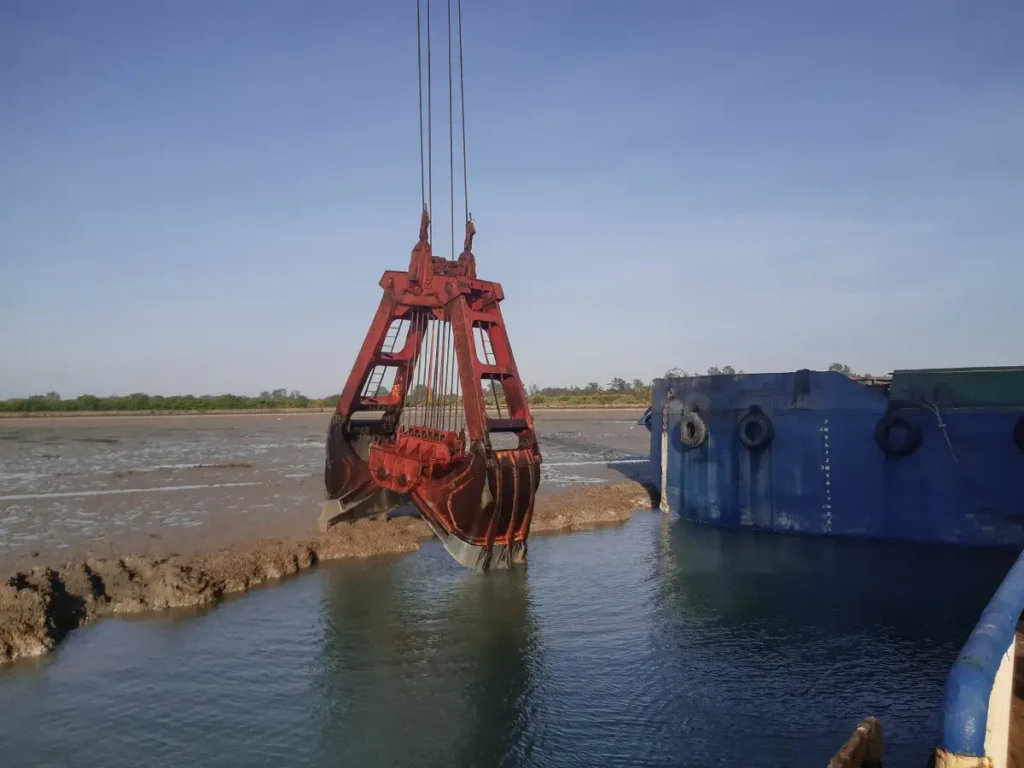
Mechanical dredging has evolved from heavy excavation to precision-driven systems that efficiently remove sediment while keeping industrial operations active. Modern lagoon dredging setups rely on adaptable, modular equipment designed to handle variable depths, confined spaces, and diverse sludge densities without full drainage or structural modification.
Hydraulic Dredging and Submersible Pumps
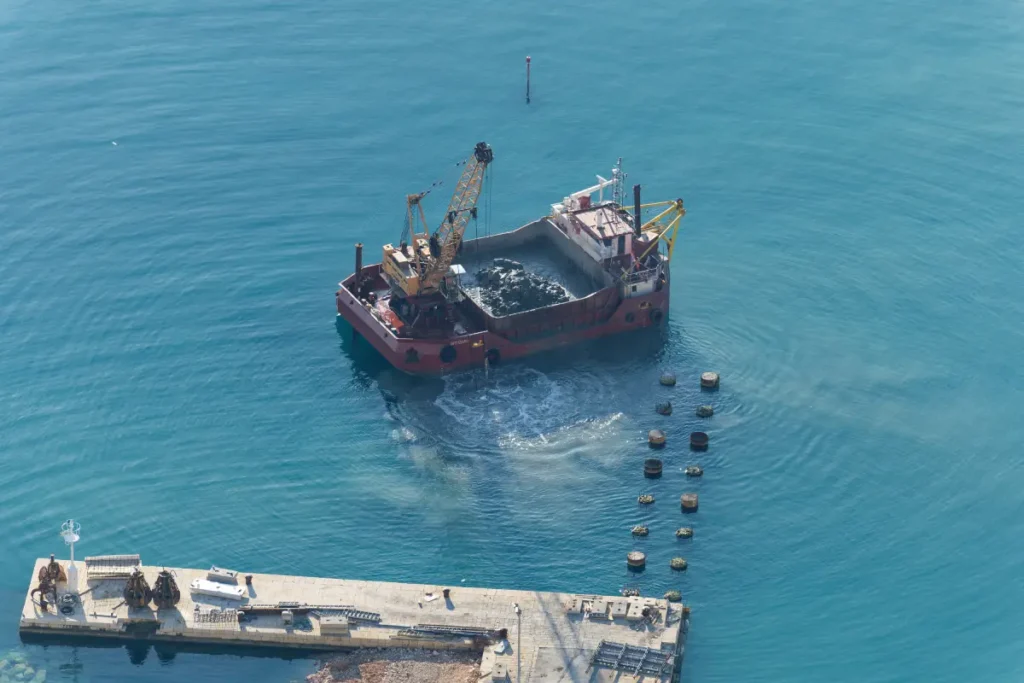
Hydraulic dredging remains one of the most effective techniques for removing sediment from industrial ponds. These systems use suction or cutterhead dredgers to break down compacted sludge and pump it as slurry through discharge pipelines. Advantages include:
- Continuous removal without draining the lagoon
- Ability to handle high-solid materials with minimal water loss
- Reduced the need for manual excavation or transport equipment
Submersible slurry pumps are frequently deployed where direct excavation isn’t feasible. They operate underwater, agitating and lifting sediment directly into dewatering systems or containment areas, ensuring cleaner, safer operations.

Amphibious and Remote-Operated Dredging Units
In sites with limited access or sensitive surroundings, amphibious excavators and remote-operated dredge systems are preferred. These machines can operate on both land and water, providing flexibility in sludge removal and equipment positioning. Key advantages include:
- Reduced risk to personnel due to remote or semi-autonomous operation
- High maneuverability in shallow or unstable lagoons
- Lower environmental disruption and faster mobilization
Cutterhead vs. Suction Dredging
Choosing between cutterhead and suction systems depends on the sediment composition and site layout:
- Cutterhead dredgers excel in compact or cohesive materials such as clay or dense sludge.
- Suction dredgers work best for fine-grained sediments, silt, or loosely deposited layers.
Many modern systems combine both methods, offering the versatility to switch based on real-time conditions detected through monitoring systems.
As technology advances, mechanical dredging continues to merge precision with sustainability, setting the stage for more efficient lagoon cleaning and sediment control.
Hydraulic and Pneumatic Conveyance Systems
Once sediment is mobilized, efficient conveyance determines how smoothly it moves from the lagoon floor to the dewatering or disposal stage. Modern sediment removal projects rely on closed-loop hydraulic and pneumatic systems to transport slurry over short or long distances without leaks or excessive water loss.
Hydraulic Pipeline Transport
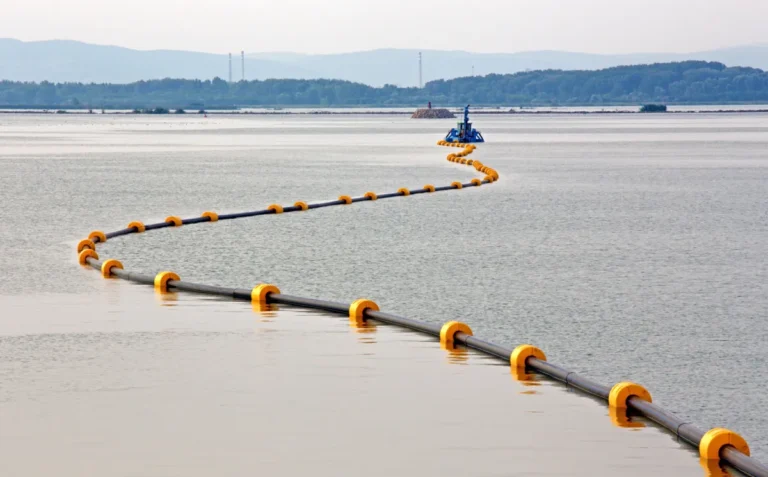
Hydraulic transport is the most common method for industrial lagoon sediment removal, in which dredged slurry is pumped through flexible or floating pipelines. This approach ensures continuous flow, reducing manual handling and environmental exposure. Common features include:
- Floating pipeline systems that adapt to changing water levels
- Abrasion-resistant hoses and couplings for handling dense sludge
- Inline flow meters and pressure gauges to monitor performance
- Automated booster pumps that maintain velocity across extended routes
The pipeline design typically depends on the distance to the disposal or dewatering site, sediment concentration, and pump discharge pressure. Optimizing these parameters minimizes energy use and prevents line blockages.
Pneumatic Transfer Systems
In smaller or more confined industrial ponds, pneumatic systems offer an alternative to liquid pumping. These systems use air pressure to move semi-dry sludge through sealed conduits or vacuum hoses. Their main advantages include:
- Minimal water usage, ideal for moisture-sensitive environments
- Cleaner operation with lower spill risk
- Easier integration with enclosed treatment or filtration systems
Monitoring and Flow Control
Advanced control panels and SCADA interfaces now allow real-time monitoring of flow rate, density, and pump pressure. This helps operators adjust performance on the fly, preventing downtime or mechanical strain.
With these engineered conveyance solutions, sediment removal becomes a continuous, contained process that supports both operational efficiency and regulatory compliance while maintaining safe working conditions.
Dewatering and Sludge Management Methods
After sediment has been hydraulically or pneumatically transferred, dewatering becomes the critical stage that determines overall project efficiency. Proper dewatering reduces the weight, volume, and moisture content of dredged material, making it easier to transport, dispose of, or repurpose within compliance limits.
Modern Dewatering Techniques
Several advanced methods are now preferred over traditional drying ponds or settling basins:
- Geotextile dewatering tubes: Large, permeable containers that allow water to escape while retaining solids. They are easy to install and suitable for confined sites.
- Filter presses and centrifuges: Mechanical systems that apply pressure or rotation to rapidly separate water from sludge, ideal for industrial lagoons producing fine or oily sediments.
- Belt filter systems: Continuous-feed designs that maintain steady throughput, supporting ongoing dredging operations.
Each method is selected based on site size, sediment composition, and disposal goals.
On-Site vs. Off-Site Dewatering
Determining where to handle dewatering depends on project scale and environmental restrictions.
- On-site dewatering is cost-effective and eliminates transport of liquid slurry but it requires sufficient space for containment and drainage.
- Off-site dewatering allows for centralized processing in regulated facilities, ideal for sediments with contaminants or high moisture content.
Many industrial projects use a hybrid approach, pre-thickening sludge on-site before final treatment elsewhere.
Post-Dewatering Handling and Disposal
- Polymer conditioning: The addition of flocculants or coagulants that enhance solids separation and speed up drying.
Once dewatered, sediment can take multiple paths:
- Safe landfill disposal for contaminated or hazardous waste
- Soil improvement or fill use for inert, non-toxic material
- Incineration or stabilization, where required by local regulations
Proper documentation and chain-of-custody tracking ensure that disposal complies with all environmental standards.
By combining efficient dewatering technology with smart handling strategies, industrial pond sediment removal projects achieve faster turnaround times and reduced overall waste volume, setting the stage for clean, operational lagoons ready for continued use.
Automation and Monitoring in Sediment Removal Projects
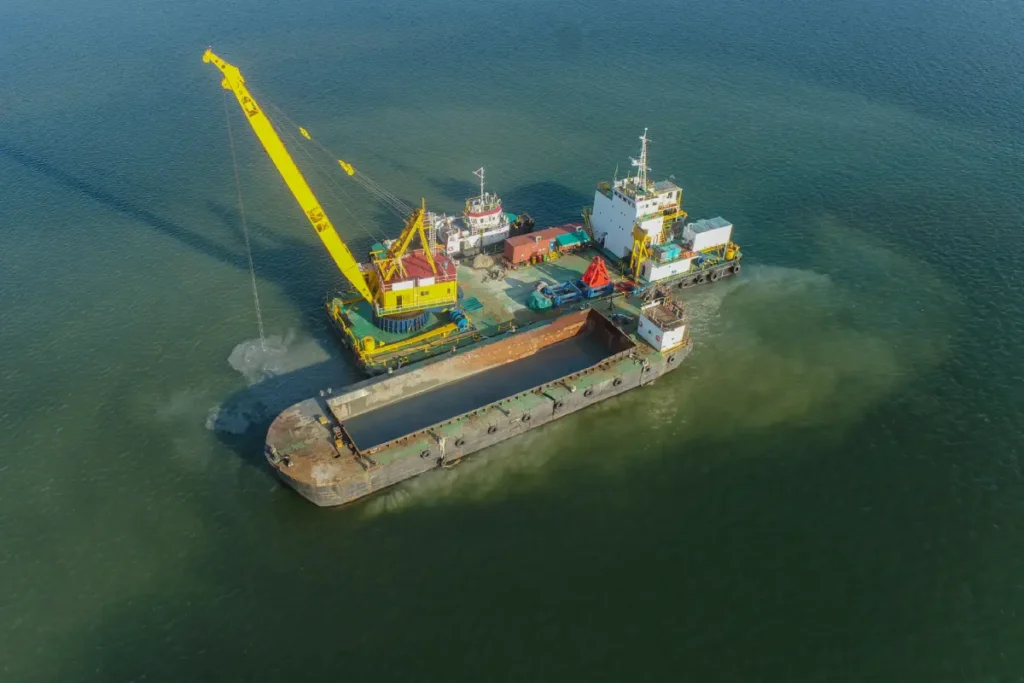
Modern sediment removal isn’t just about machinery—it’s about precision control. Automation has transformed how engineers plan, execute, and monitor industrial lagoon sediment removal. By integrating sensors, data systems, and GPS guidance, operators can now track every phase of the operation with remarkable accuracy and minimal manual oversight.
Smart Systems in Action
- GPS-guided dredging ensures consistent removal depth and prevents over-dredging.
- Flow and density sensors measure sediment concentration in real time.
- Automated pump control adjusts pressure and speed to maintain ideal flow conditions.
- Remote operation panels allow crews to oversee progress from shore-based control rooms.
These systems not only improve accuracy but also enhance safety by keeping operators away from hazardous areas.
Data for Smarter Decision-Making
Automation generates a continuous stream of operational data—flow rates, turbidity levels, pump performance, and dredge positioning. This data supports predictive maintenance and helps identify when to recalibrate equipment before failures occur. It also creates transparent reporting for clients and regulators.
The Human Element
While automation has reduced manual dependency, skilled technicians remain vital. Their expertise in interpreting data, tuning equipment, and managing field variables keeps automated systems effective and adaptive to real-world conditions.
The integration of technology with human judgment marks a shift toward smarter, safer, and more sustainable sediment management that continues to evolve with every project.
Environmental and Safety Considerations
Every industrial lagoon sediment removal project must balance efficiency with environmental protection and worker safety. Sediment often contains contaminants, hydrocarbons, or heavy metals that can harm nearby ecosystems if released. Modern operations are built around minimizing this risk through containment, monitoring, and responsible disposal.
Containment and Turbidity Control
To prevent disturbed sediments from spreading during dredging, teams deploy containment measures such as:
- Floating silt curtains that isolate work zones
- Closed-loop dredging systems, where the discharge water is filtered and returned clean
- Real-time turbidity sensors that track water clarity and signal corrective action
These tools ensure that adjacent ponds, rivers, or treatment systems remain unaffected throughout the process.
Noise, Air, and Emission Management
Dredging and pumping equipment can generate noise and exhaust that disrupt industrial sites or nearby communities. To manage these impacts, contractors increasingly use:
- Low-emission diesel or electric-powered dredge systems
- Sound-dampened enclosures for power units and pumps
- Optimized work hours to reduce operational disturbance
Such measures align with environmental standards while maintaining a safe and comfortable workspace for personnel.
Worker Safety and Site Protocols
Safety remains a central focus in industrial pond sediment removal, particularly in areas with confined spaces, slippery surfaces, or chemical residues. Safety programs typically include:
- Hazard assessments and job-specific safety plans
- Use of personal protective equipment suited to chemical or biological exposure
- Emergency containment kits and evacuation procedures
Training crews to operate within strict safety and environmental frameworks helps maintain project consistency and regulatory compliance.
By integrating these controls from planning through execution, lagoon cleaning projects maintain a balance among performance, sustainability, and long-term ecological health.
Choosing the Right Industrial Sediment Removal Partner
Selecting the right partner is as critical as choosing the right equipment. Industrial lagoon sediment removal demands more than just machinery; it requires a team experienced in engineering, safety compliance, and environmental stewardship. The right contractor brings the technical expertise and adaptability needed to handle varying lagoon conditions while maintaining efficient, compliant operations.
What to Look for in a Service Provider
When evaluating potential partners, consider the following factors:
- Experience across industries: Familiarity with chemical plants, refineries, and wastewater facilities ensures faster adaptation to complex site conditions.
- Range of equipment: Access to dredges, submersible pumps, booster systems, and dewatering units means solutions can be customized for each site.
- Environmental and safety credentials: ISO certifications, confined-space training, and documented safety programs — signal professional readiness.
- In-house engineering capability: Providers who can model flow rates, sediment density, and disposal logistics deliver more reliable outcomes.
- Responsive support: 24/7 maintenance, on-site technicians, and emergency response readiness minimize downtime during operations.
Beyond the Contract
A strong partner not only removes sediment but also helps design preventive maintenance strategies to delay future buildup. Their insights on sediment profiling, treatment optimization, and disposal documentation can reduce long-term costs and enhance compliance with local environmental authorities.
The best sediment removal providers operate as an extension of your own team—combining technical precision, environmental responsibility, and dependable service from start to finish.
Conclusion: Cleaner, Safer, and More Efficient Sediment Removal
Modern sediment removal has evolved into a balance of technology, safety, and environmental care. By adopting advanced dredging systems, efficient dewatering solutions, and real-time monitoring, industries can restore lagoon capacity and improve operational continuity without unnecessary disruption. At Lone Star Dredge, we combine experience with innovation to deliver complete lagoon and pond cleaning solutions tailored to your facility’s unique requirements. Partner with us to maintain cleaner, more efficient lagoons that keep your operations running at their best.